Key Takeaways
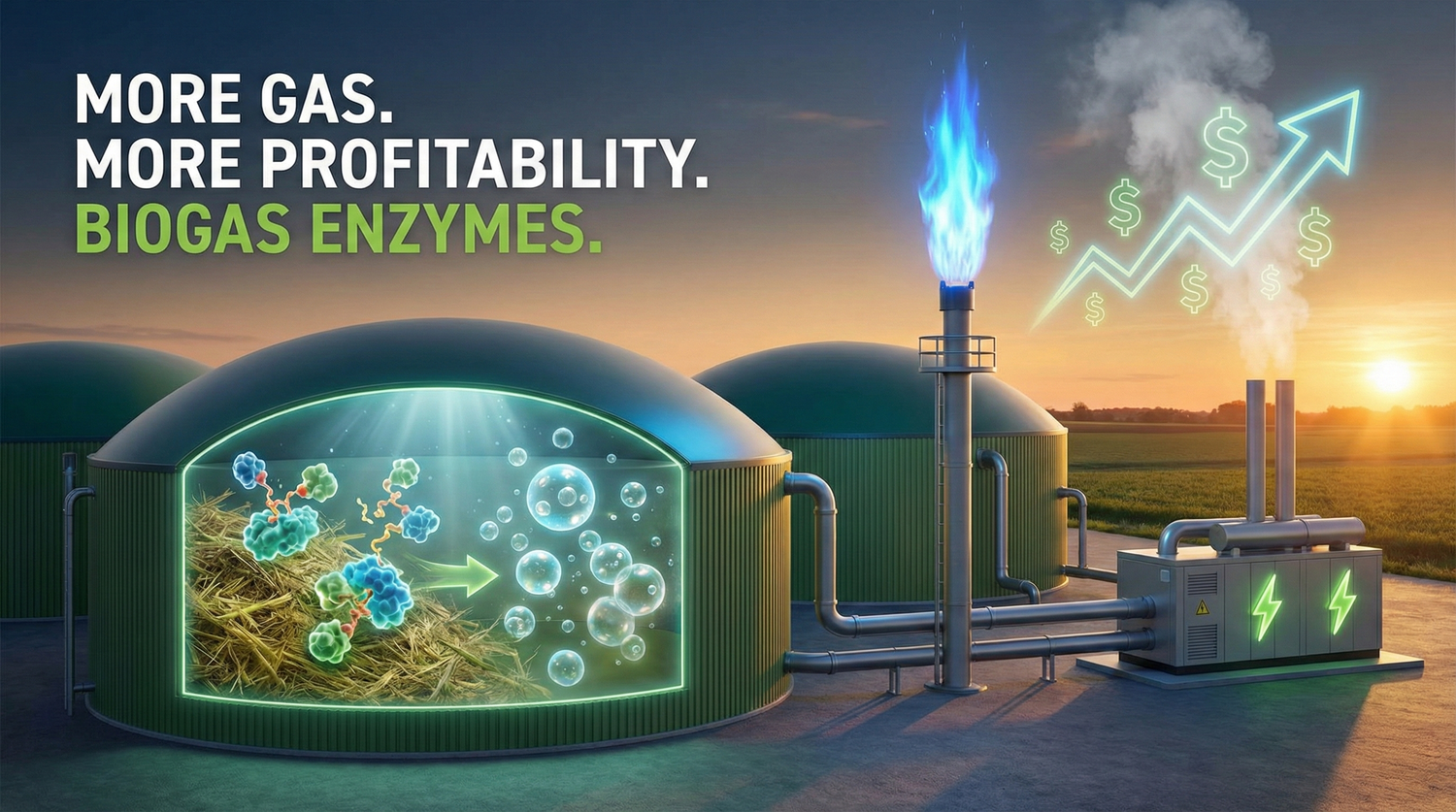
- Challenge: Insufficient breakdown of biomass often limits methane production.
- Solution: Specialized enzymes accelerate hydrolysis and degrade complex fibers.
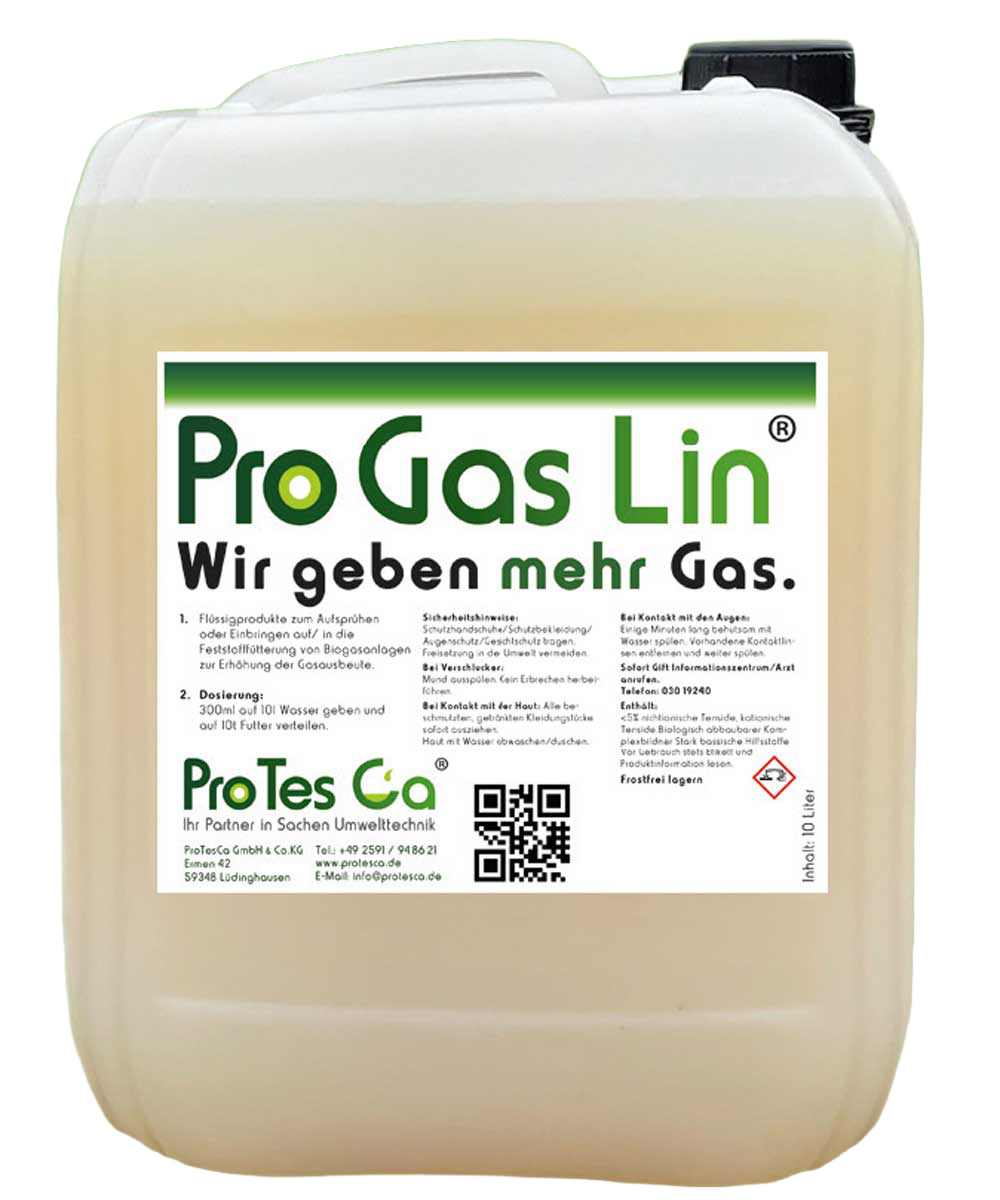
- Result: ProGasLin increases gas yields and profitability without structural changes.
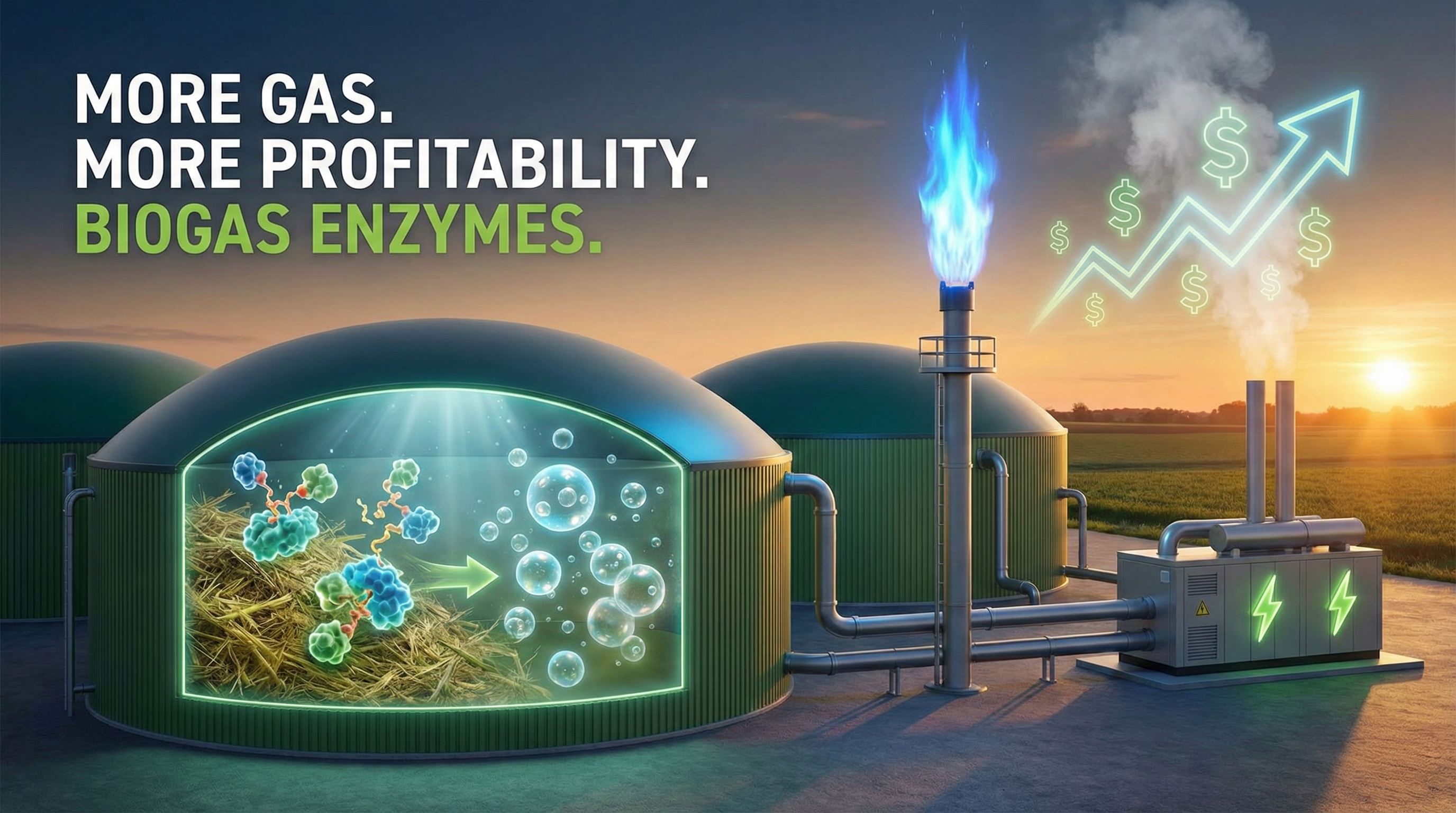
Today, the biogas plant is a central pillar of renewable energy, sustainable energy production and agricultural value creation. Operators of biogas plants face the challenge of running their facilities economically, reliably and with maximum output. This is exactly where enzymes in biogas plants play an increasingly important role. They enable higher gas yields, improved substrate utilization and significantly enhanced profitability of biogas production.
Why enzymes are indispensable in biogas plants
In biogas plants, organic substrates such as slurry, manure, grass silage, maize silage, whole-crop silage, renewable raw materials and organic residues are fermented in the digester. The objective is to maximize biogas production with a high methane content. The limiting factor is often insufficient breakdown of the biomass.
This is precisely where enzymes come into play. They accelerate biological degradation, break down plant fibers, cellulose, hemicellulose and other complex organic structures, and provide microorganisms with easily fermentable components. The result is more efficient biogas production with higher methane yields.
Higher gas yields through optimized hydrolysis
Hydrolysis is the first and most decisive stage of the biogas process. Optimized hydrolysis directly results in more biogas, higher gas yields and better utilization of digester volume. ProGasLin was specifically developed to support this process in biogas plants.
Targeted use of ProGasLin improves the availability of organic dry matter, leading to:
- Higher specific methane yield
- Faster digestion in the digester
- Increased biogas production per tonne of substrate
- More efficient use of available substrates
Comparison: Standard Process vs. Enzymatic Optimization
| Performance Metric | Standard Process | With ProGasLin Enzymes |
|---|---|---|
| Hydrolysis Speed | Slow / Variable | Accelerated |
| Fiber Breakdown | Incomplete | Maximized |
| Viscosity | High (Hard to stir) | Reduced (Energy saving) |
| Methane Yield | Standard | Significantly Higher |
Greater profitability for your biogas plant
The profitability of a biogas plant depends directly on methane yield, gas production and substrate efficiency. ProGasLin helps operators optimize existing biogas plants without structural modifications. Enzymatic process optimization delivers:
- Increased electricity generation from biogas
- Higher heat output in combined heat and power units
- Improved biomethane yield
- Reduction of undigested residues in digestate
- Enhanced overall energy efficiency
ProGasLin – developed for practice, performance and sustainability
ProGasLin is a high-performance enzymatic product designed for agricultural biogas plants. It is easy to dose, flexible to apply and compatible with existing plant concepts. Its full potential is particularly evident with fiber-rich substrates.
Beyond increased gas yields, operators benefit from more stable processes, more consistent gas production and improved control of biological processes within the digester.
Conclusion: Enzymes as a competitive advantage in biogas production
Anyone seeking to operate a biogas plant in a future-proof, profitable and high-performance manner relies on modern enzymatic solutions. ProGasLin stands for maximum efficiency, higher methane yields, sustainable biogas production and improved profitability.