Key Takeaways
- Challenge: Selecting the correct screen basket size is crucial for efficient solid-liquid separation in agriculture and biogas plants.
- Solution: Understanding the relationship between slot width, throughput, and separation efficiency based on substrate type.
- Result: Optimizing separation efficiency, throughput, and economic performance by choosing the right screen basket size for the specific application.
Efficient solid–liquid separation is now a key component of modern agriculture and biogas plants. Whether dealing with slurry, cattle slurry, pig slurry or digestate from biogas production, the use of a high-performance separation system – typically a screw press separator – has a decisive impact on economic efficiency, nutrient management and plant availability.
The Screen Basket as the Core Component of the Separation System
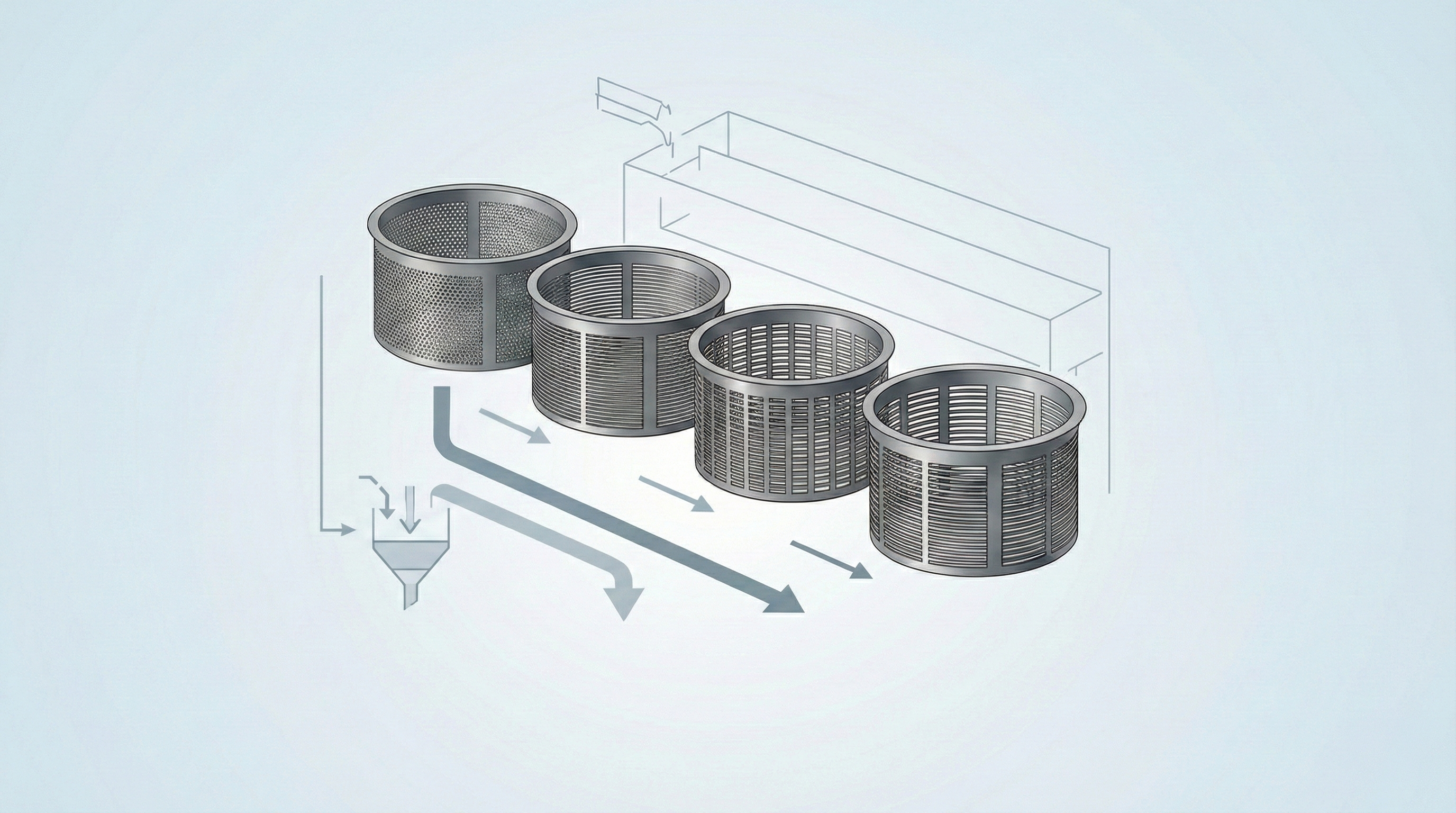
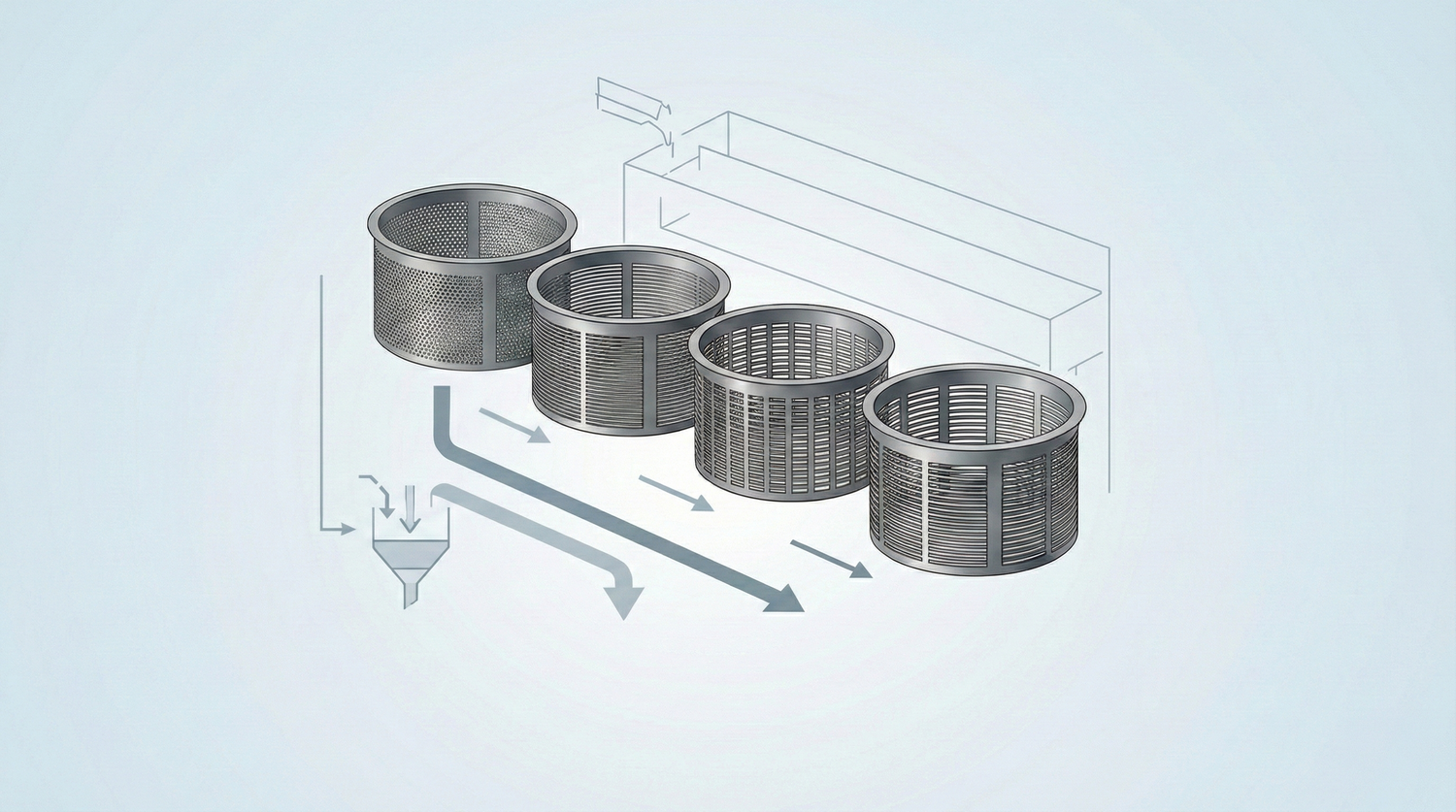
At the heart of every slurry separation system is the screen basket. The correct screen basket size, slot width or screen opening determines the degree of separation achieved, the throughput capacity of the system and the dry matter (DM) content of the solid fraction.
The screen basket – also referred to as a screen cylinder – forms the separation surface between solids and liquid. While the screw press compacts the substrate, the slot width and screen basket size determine how effectively solids are separated.
Basic rule of separation: The smaller the slot width, the higher the separation efficiency – but at the same time, throughput decreases. Larger slot widths allow higher flow rates (m³/h) but permit more fine particles to pass into the liquid phase.
Proven Screen Basket Sizes in Agriculture
- 0.75 mm screen basket: The most commonly used screen basket size in agriculture. It offers an excellent balance between separation efficiency, throughput and operational reliability. Ideal for cattle slurry, mixed slurry and universal separation systems.
- 0.50 mm screen basket: Used where higher demands are placed on solid separation. Suitable when a higher separation efficiency or finer solids are required. Throughput is lower than with a 0.75 mm screen basket.
- 0.25 mm screen basket: Very fine slot width for maximum separation performance. In practice, usually only suitable as a second stage in a two-stage separation system.
- 1.00 mm screen basket: Large slot width for high throughput capacities. Suitable for coarse separation and for protecting downstream equipment.
- 0.35 mm screen basket: An intermediate solution for special requirements and customised separator settings.
Screen Basket Sizes in Biogas Plants
In the biogas sector, separation is used either before or after the digester.
- Separation before the digester: Larger slot widths are often used to remove fibrous materials and contaminants, ensuring stable plant operation.
- Digestate separation after the digester: The aim is dewatering, volume reduction and targeted nutrient redistribution. Screen basket sizes between 0.50 and 0.75 mm have proven effective for this application.
Green Bedding and Bedding Material Recovery
The production of green bedding from separated slurry is becoming increasingly important. A uniform and sufficiently high dry matter content is essential. Screen baskets with slot widths of 0.50 mm to 0.75 mm are commonly used to produce dry, hygienically suitable bedding material.
Limits of Mechanical Slurry Separation
Especially when processing pig slurry, low-solids substrates or highly homogenised digestates, purely mechanical solid–liquid separation reaches its limits. Fine particles can only be separated to a limited extent. In such cases, the use of flocculants can be beneficial. These bind fine particles into larger flocs and significantly improve separation efficiency.
More Important Than Expected: Correct System Settings
Separation performance is not determined by screen basket size alone. Factors such as:
- Dry matter content of the feed material
- Degree of homogenisation
- Back-pressure adjustment
- Condition of wear parts
also have a major influence on the outcome of slurry separation.
Conclusion: The Right Screen Basket Size for Maximum Efficiency
The screen basket is the central component of every separation system. For many agricultural applications, the 0.75 mm screen basket has proven to be the reliable standard. Biogas plants and specialised applications benefit from finer or coarser slot widths depending on their specific objectives. Anyone aiming to optimally combine separation efficiency, throughput and economic performance should always select the screen basket size based on the substrate, application and separation goal.